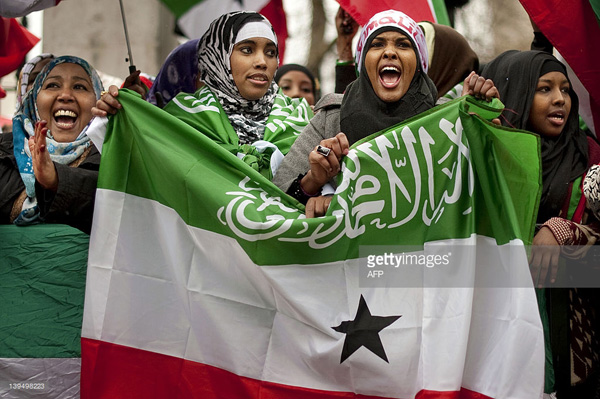
Guban View: America’s critical but unrecognized ally in the Horn of Africa
It is time, and in America’s own interests, to end the “Forever War” in Somalia and recognize Somaliland. For more than 30 years, the autonomous region of Somaliland has maintained stability, effective governance, and security in the Horn of Africa — a region plagued by conflict, authoritarian rule, and extremist activities.
Somaliland sits on 530 miles of the Gulf of Aden, one of the world’s most critical maritime chokepoints. It has kept its waters free from piracy and terrorism, forged ties with Taiwan in defiance of Communist China, and offered Washington access to Berbera Port, once a major U.S. military facility.
The Dubai-based DP World has invested $442 million to expand Berbera, and a planned $3 billion UAE-financed rail link will connect Ethiopia — East Africa’s most populous nation — to global shipping lanes
Despite these achievements, Somaliland continues to lack formal diplomatic recognition, limiting its potential as a partner for regional peace and security.
U.S. recognition
As the United States reassesses its “One Somalia” policy in light of the Somali government’s inability to stabilize the war-torn country and effectively combat the terrorist group Al-Shabaab, powerful members of Congress and former senior diplomats are urging Washington to recognize Somaliland at its 1960 borders.
Doing so would not abandon Somalia. It would acknowledge the reality in that important region of the world. It would give America greater strategic flexibility while honoring the principles of self-determination and democratic governance.
The case for recognition is legal and moral. Somaliland was a British protectorate until June 26, 1960, when it gained independence and was recognized by 35 nations, including the United States. Days later, it voluntarily joined with the former UN Italian-administered territory of Somalia. That union quickly devolved into authoritarian rule, clan warfare and state collapse.
When Siad Barre, Somalia’s Marxist dictator, turned on Somaliland in the late 1980s, it unleashed one of the worst atrocities in modern African history. Backed by much of the Arab world, Italy, and even the United States, Barre’s army waged a campaign of mass killings, aerial bombardment, and scorched-earth tactics.
Between 1988 and 1989, more than 50,000 civilians were slaughtered, major cities such as Hargeisa and Burao were reduced to rubble, and hundreds of thousands fled to Ethiopia. These were not excesses of war but deliberate crimes against humanity—a genocide against Somaliland’s Isaaq people for demanding self-determination.
After Barre’s downfall in 1991, Somalilanders chose reconciliation over revenge. Clan elders and civil society leaders built a functioning democracy with little international assistance. Unlike Somalia, Somaliland has held peaceful transfers of power, sustained an elected parliament, and governed by ballots instead of bribes. In 2001, its citizens voted overwhelmingly for independence in a nationwide referendum.
A critical partner
Today, Somaliland’s new president, Abdirahman Mohamed Abdillahi “Irro,” has made clear he is prepared to leverage the nation’s mineral wealth and strategic location — including hosting a U.S. presence at Berbera — in exchange for recognition.
Sen. Ted Cruz has called Somaliland a “critical security and diplomatic partner,” urging President Trump to recognize it. Pennsylvania Congressman Scott Perry also introduced the Republic of Somaliland Independence Act, a bill that formally recognizes Somaliland as an independent country.
America’s hesitation is being exploited by its rivals. China has poured billions into Djibouti, where it maintains its first overseas naval base, and is courting Eritrea as a strategic partner. Russia has announced plans for a base in Sudan.
Turkey operates a military base in Mogadishu and has signed a sided agreement on oil, gas, and fishing with Somalia’s government. By clinging to the fiction of “One-Somalia,” Washington risks ceding the Horn of Africa to authoritarian powers.
Critics argue that recognizing Somaliland would undermine the fight against al-Shabab. But terrorism thrives not because Somaliland has a functioning democracy, but because Somalia has remained, in the words of Professor Abdi Samatar of the University of Minnesota and a member of the Somali legislature, a place where “Dishonesty, deceit, corruption, tribalism, and lying have been characteristic of Somali politics for a long time.”
In reality, recognition would allow Washington to work directly with Somaliland’s capable security forces, thereby enhancing counterterrorism efforts and securing the Gulf of Aden’s vital sea lanes from the belligerence of Iran’s proxy.
End the war
It is time to end the “Forever War” in Somalia. Instead, the United States, the European Union, and the African Union should broker a settlement that acknowledges Somaliland’s independence while fostering a cooperative regional framework.
America cannot police the world — but it can choose its allies carefully. The six million Somalilanders have already chosen democracy, stability, and partnership with the West. The question is whether Washington will finally recognize and reward them.
Ali-Guban Mohamed, a political analyst specializing in Horn of Africa politics and security, is the founder and editor of Gubanmedia.com.
The Article was originally published on Pittsburgh Gazzette